EPR Registration for Battery Waste in India
With the rapid growth of technology, electric mobility, and renewable energy solutions, the demand for batteries has increased significantly. Batteries play a crucial role in modern energy systems, especially in electric vehicles (EVs), solar storage, and electronic devices. However, this rise in usage has also led to a sharp increase in battery waste.
Improper disposal of used batteries can pose serious environmental and health risks due to hazardous substances such as lead, lithium, and other toxic materials. To address this challenge, the Government of India introduced the Battery Waste Management Rules, 2022, replacing the earlier 2001 rules. These regulations aim to ensure the safe collection, recycling, and disposal of battery waste through the framework of Extended Producer Responsibility (EPR).
99%
Success Rate
1000+
Certifications
32+
Locations served services
20+
Years Expertise
Get Free Expert Consultation
What is EPR Registration for Battery Waste?
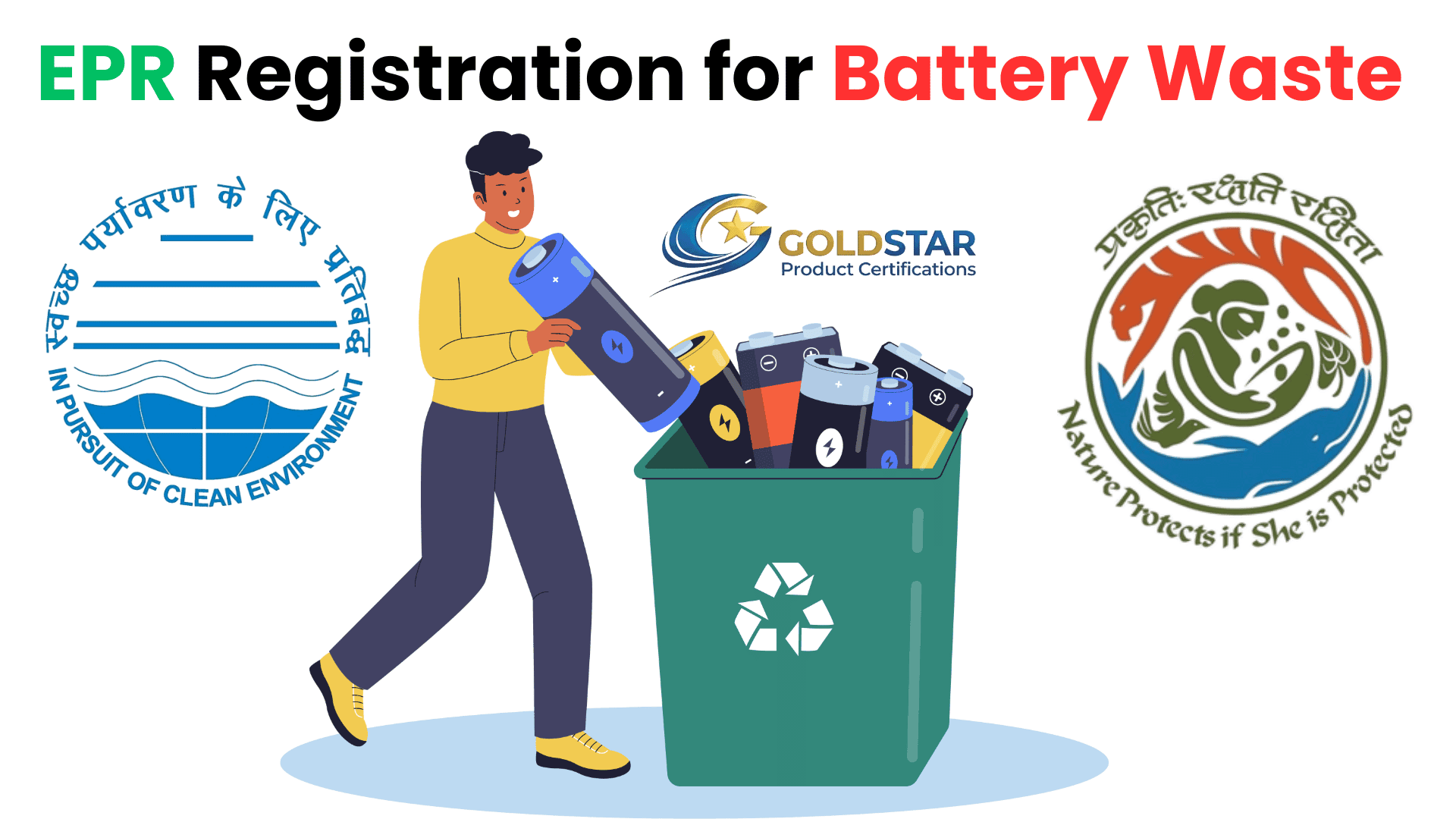
Extended Producer Responsibility (EPR) for battery waste is a regulatory mechanism that makes producers responsible for managing batteries throughout their lifecycle, including their end-of-life stage.
Under EPR, entities that introduce batteries into the market must collect used or discarded batteries, ensure recycling or refurbishment through authorized recyclers, and prevent improper disposal such as landfilling or incineration. This approach promotes accountability and environmentally sound waste management practices.
Importance of EPR Registration
EPR registration for battery waste is essential for the following reasons. Non-compliance may lead to penalties, suspension, or cancellation of registration.
Environmental Protection: Reduces pollution caused by hazardous battery materials
Legal Compliance: Ensures adherence to Indian environmental regulations
Resource Recovery: Encourages recycling and reuse of valuable materials
Landfill Reduction: Minimizes waste accumulation
Corporate Responsibility: Strengthens sustainability commitments
EPR Registration Process for Battery Waste
The process involves the following key steps:
Eligibility Assessment
Evaluate business activities, battery types, and quantities introduced into the market.
Documentation Preparation
Compile all required documents, including technical details and compliance information.
Application Submission
Submit the application through the centralized EPR portal managed by the Central Pollution Control Board (CPCB).
Review and Clarification
Respond to queries or additional requirements raised by the authorities.
Grant of Authorization
Upon approval, the applicant receives an EPR certificate along with a unique registration number.
Documents Required for EPR Registration
General Documents
- PAN Card and GST Certificate
- Certificate of Incorporation / CIN
- Import Export Code (for importers)
- Authorized signatory details
Additional Requirements
- Details of batteries placed in the market
- Consent from pollution control authorities (if applicable)
- Proper documentation ensures smooth and timely approval
Who Needs EPR Registration & Mandatory Products
Entities Requiring EPR Registration
- Battery manufacturers
- Importers of batteries
- Producers and brand owners
- Companies selling battery-based products such as EVs, UPS systems, electronics, and solar equipment
- Any entity placing batteries in the Indian market
Mandatory Product Categories
- Laptops and personal computers
- Notebooks and computing devices
- Data processing equipment such as servers and mainframes
- Electronics integrated with batteries
Responsibilities and Post-Registration Compliance
Responsibilities of Producers Under EPR
- Register and renew on the CPCB EPR portal
- Meet annual collection, recycling, and refurbishment targets
- Submit a detailed EPR Action Plan
- Disclose battery composition (lead, lithium, cobalt, etc.)
- File mandatory returns and compliance forms
- Ensure minimum usage of recycled materials in manufacturing
Post-Registration Compliance
- Achieve annual collection and recycling targets
- Maintain proper records of battery waste management
- File annual EPR returns
- Collaborate with authorized recyclers and refurbishers
- Comply with audits and reporting requirements
Online EPR Registration
The EPR registration process is fully digital, allowing applicants to: Submit applications online, track real-time status, respond to authority queries, and download certificates. This streamlined process ensures faster approvals.
Validity and Renewal
EPR authorization for battery waste is granted for a specified period. Renewal requires: Submission of renewal application before expiry, Filing of annual compliance reports, Demonstration of target fulfillment.
Why Choose Professional Assistance? Professional EPR consultancy services help businesses by ensuring accurate interpretation of regulations, preparing error-free documentation, facilitating faster approval, and providing ongoing compliance support.
EPR registration for battery waste is a critical requirement for businesses dealing with batteries and battery-operated products in India. It promotes responsible waste management, supports recycling initiatives, and ensures environmental protection. By complying with EPR regulations, companies not only meet legal obligations but also contribute to a sustainable and eco-friendly future.
Let's Talk About Product Certification
Gold Star has experienced BIS certification consultants who are committed to providing reliable compliance services across India. We guide you at every stage of the certification process and help you understand the exact requirements your product must meet to enter the Indian market and build a strong, trusted customer base.