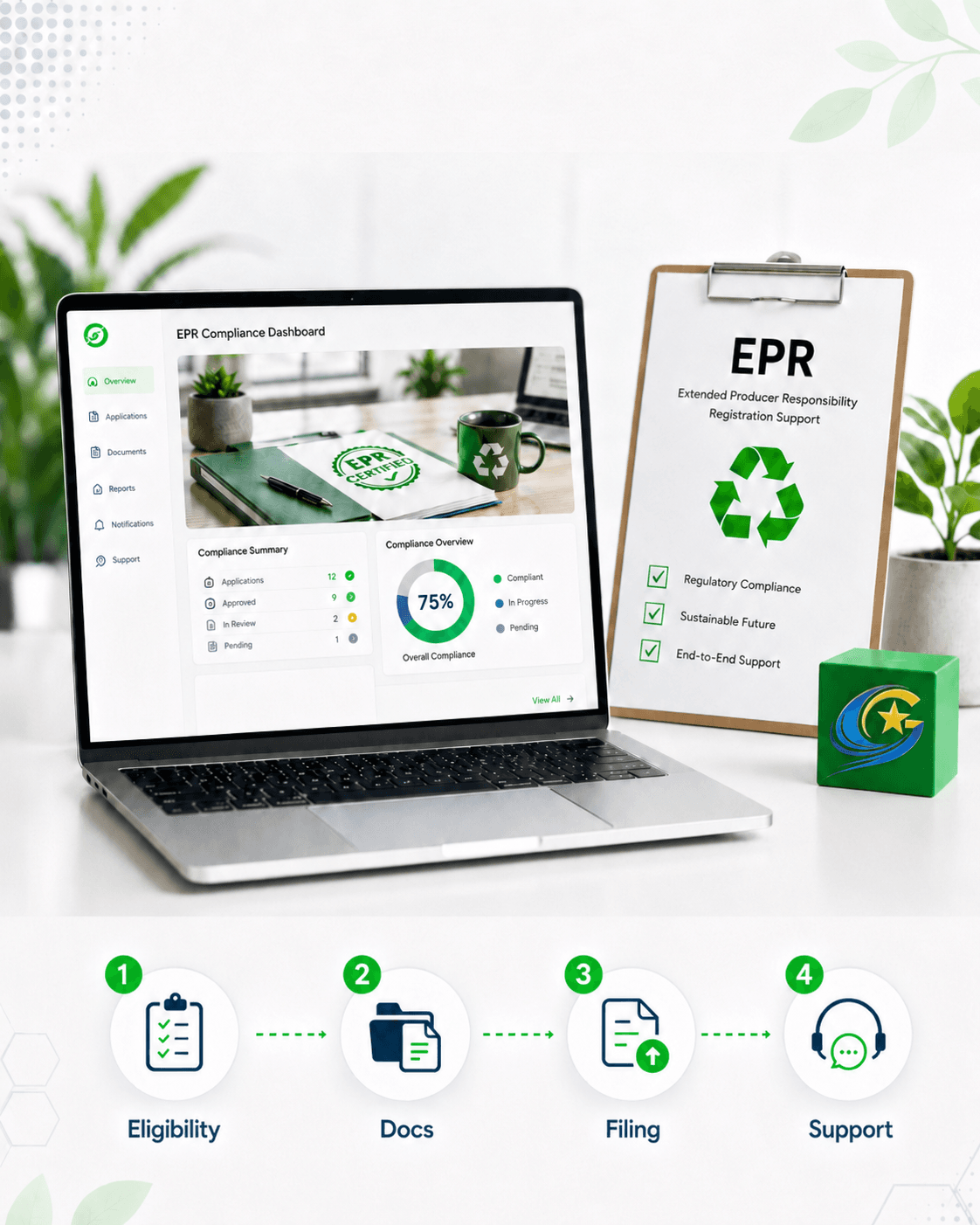
EPR Certification in India
Free Consultation for EPR Certificate - Gold Star Product Certification
Looking into EPR Registration in India issues? If so, then you are in the right place. Our experts at GSPC will help you with EPR registration, we have helped 4000+ Entrepreneurs to register EPR since 2012.
Get Free Expert Consultation
What’s Included?
EPR Certification - An Overview
Manufacturers, importers and brand owners of electronics products, electronic components, batteries, plastic packaging and tires are required to have the EPR (Extended Producer Responsibility) Certification. It helps in complying with the environmental legislation under the Environment (Protection) Act, 1986 and applicable waste management regulations.
The Central Pollution Control Board (CPCB) provides EPR registration on its online portal and the SPCBs assist the states in implementation. The registration process is made easier with Gold Star Product Certification, allowing companies to get compliant without the hassle.
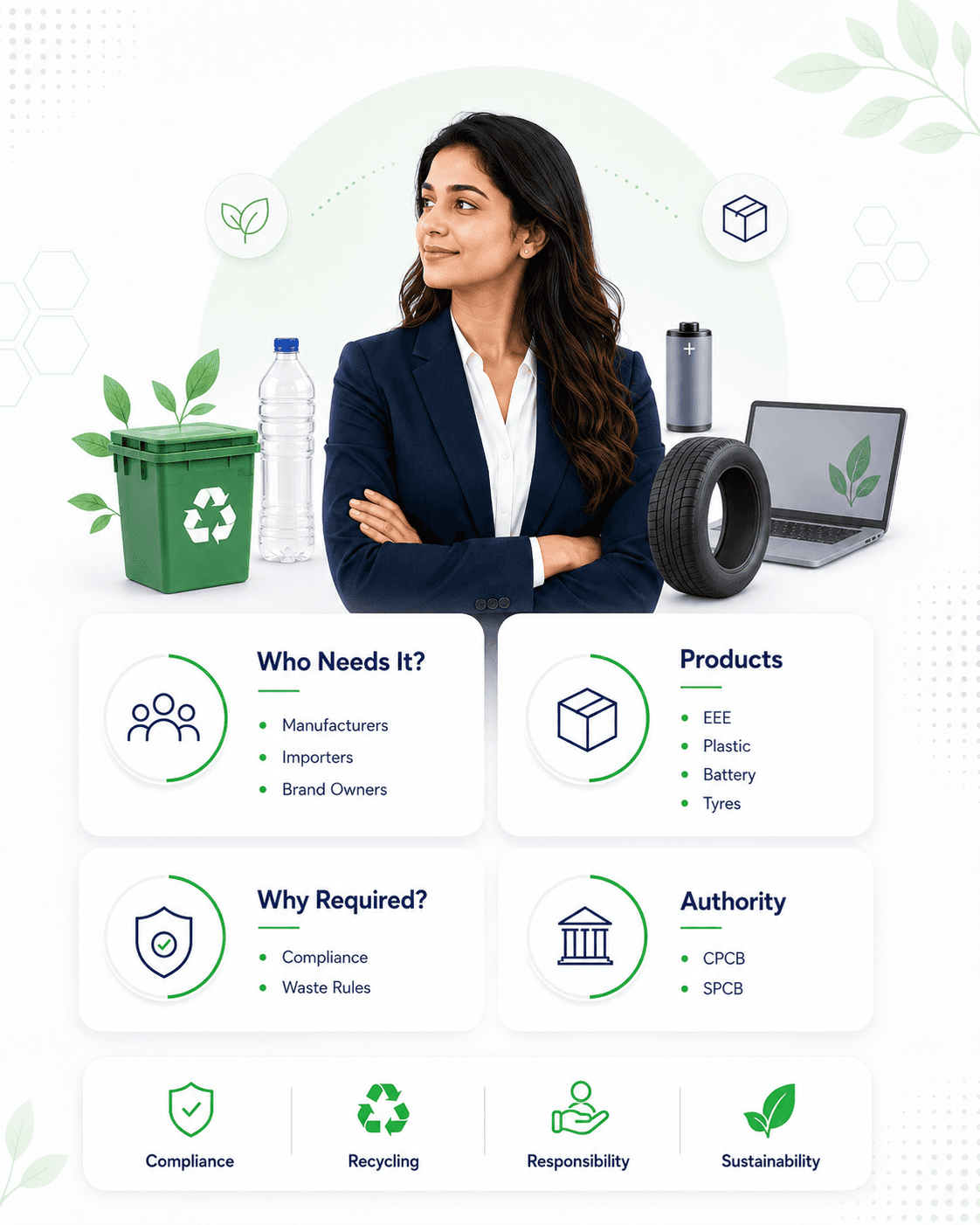
What is EPR Certification?
EPR registration is a must for a business venture's dedication to a sustainable environment. Applicants seeking EPR registration on Central Pollution Control Board (CPCB)'s official website are required to transact business in India.
Some of the products covered under EPR compliance for EPR registration include :
- Electrical & Electronic Equipment (EEE) - covered under E-Waste (Management) Rules, 2016.
- Plastic Products - covered under Plastic Waste Management Rules, 2016.
- Batteries and Accumulators - These are included in the Batteries (Management and Handling) Rules 2001.
- Packaging Materials – Covered under Plastic Waste Management Rules, 2016 and other applicable rules
Benefits of EPR Certification Online in India
The advantages of online EPR Registration in India are numerous.The advantages of EPR Registration Online in India are many. There are numerous advantages to EPR registration for manufacturers, consumers, importers and the environment. It helps to obtain plastic packaging waste by recycling, reuse or disposal (EoL). This is important because it helps to drive the production of products that are environmentally friendly and help to decrease pollution.
The advantages of EPR Registration online are:
Effective Waste Management
Cost Management
Goodwill and Brand Imaging
Environment Friendly
Benefit to Taxpayers
Promotes Sustainable Development
Documents Required for EPR Certification
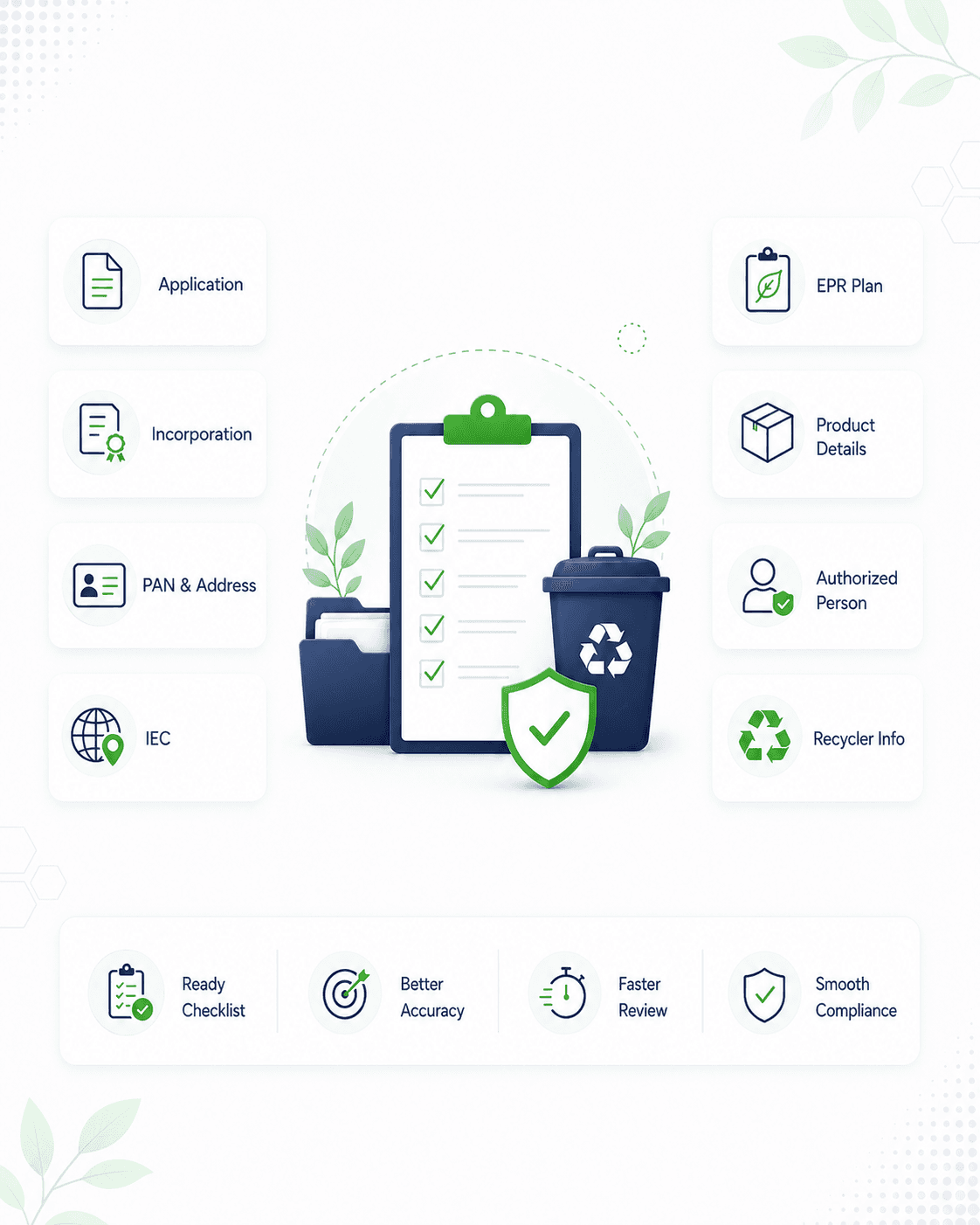
Following are the vital Documents required for EPR Certification, must be available with the applicant before initiating the project:
Application Form
To register for EPR, a completed and signed application form needs to be submitted to the respective authority.
EPR Plan
An EPR Plan detailing the strategy to achieve collection, recycling and disposal targets prescribed by CPCB or SPCB is necessary.
Business Authorization Documents
Any legal documents to allow for the manufacture, import, sale/distribution of EEE products or plastic packaging must be given.
Waste Collection and Management Agreement
It requires an agreement or MoU with the authorised bodies who collect and manage the e-waste or plastic waste.
Waste Transportation Agreement
A contract with an approved transport company for waste disposal in accordance with the relevant waste disposal laws is to be submitted.
Laboratory Testing Agreement
There is a need to have an MoU with an authorized laboratory for testing waste materials as per RoHS and all other compliance requirements set by CPCB/SPCB.
Regulatory Compliance Agreement
Wherever necessary, the relevant agreements or approvals related to compliance to E-Waste Management Rules or Plastic Waste Management Rules should be provided.
Business Address Proof
A valid address proof, along with supporting documentation for the registered business premise is required.
PAN Card and Contact Details
Update applicant's contact details and submit a copy of the PAN Card.
Certificate of Incorporation
Companies will need to present their Certificate of incorporation or other documents of incorporation.
This code is known as 'Import Export Code' or IEC
The importers are supposed to provide a valid Import Export Code (IEC) certificate for verification.
Awareness Initiative Details
Awareness programmes or initiatives carried out for waste management and recycling should be provided.
EPR Budget Allocation
The budget for the activities under Extended Producer Responsibility should be provided.
Waste Management Estimates
The approximate amounts of waste produced, collected, recycled, and disposed of should be explicitly stated.
Recycler Information
Information on approved recyclers involved in waste processing and recycling should be provided.
BIS License Copy
In case of application to a product category, a copy of BIS License shall be submitted.
Authorized Person Details
Proper identification with authorization letters and contact information of authorized representatives must be presented.
Product Information
All information regarding products subject to EPR obligations such as specification, categories, etc. shall be provided in detail.
Municipal or Local Authority Certificates
If applicable, relevant certificates/approvals from municipalities or local authorities should be attached.
Additional Documents
All other documents required during the application review process by CPCB, SPCB or any other related regulatory authorities should be submitted.
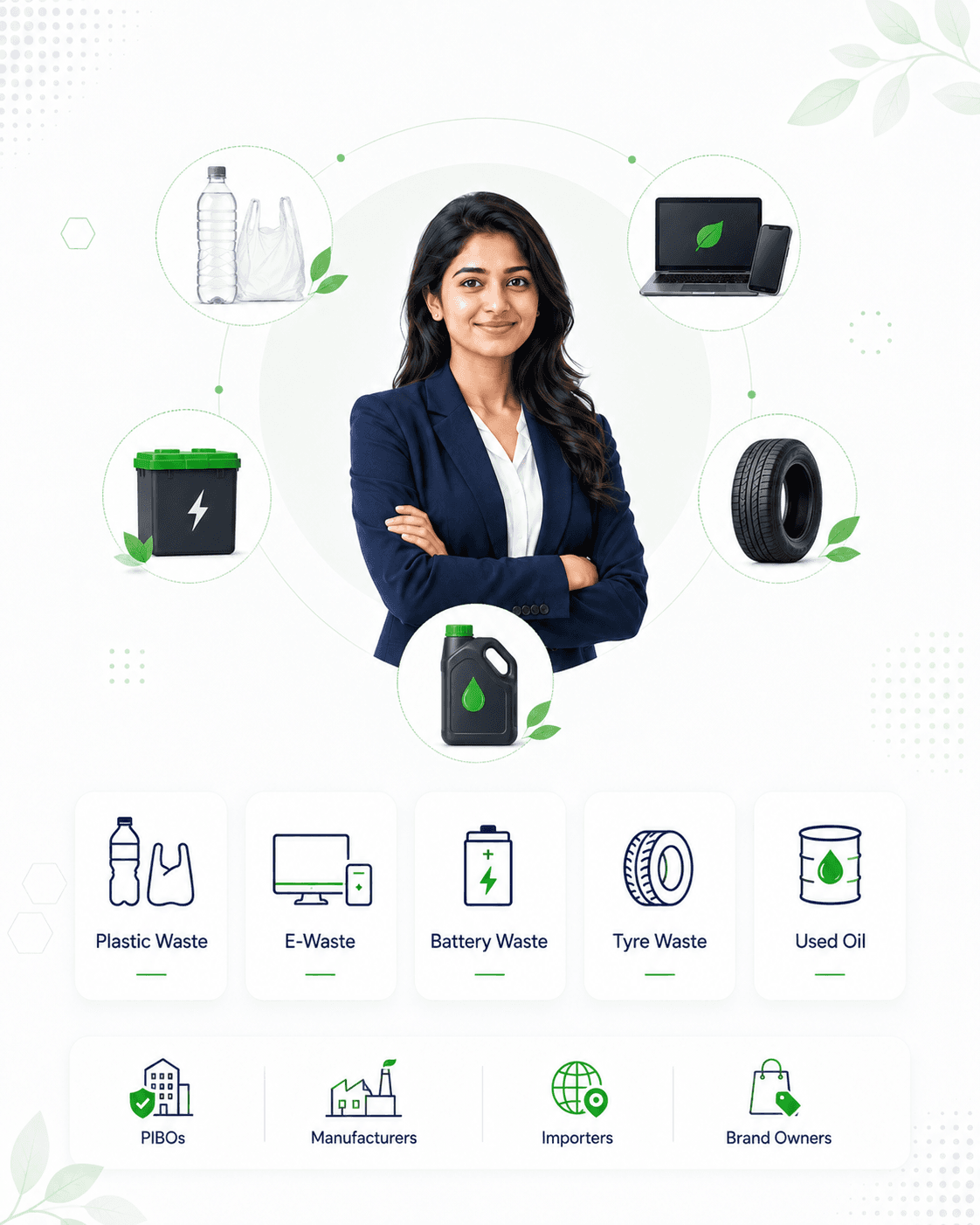
Types of EPR Registrations in India
1. Plastic Waste Management: For Producers, Importers, and Brand Owners (PIBOs) dealing with plastic packaging waste.
2. Battery Waste Management: Applicable to entities involved in the manufacture, import, sale, or recycling of batteries.
3. E-Waste Management: Required for producers of electrical and electronic equipment to manage e-waste responsibly.
4. Tyre Waste Management: Mandatory for tyre manufacturers and importers to ensure proper collection and recycling of waste tyres.
5. Used Oil Management: Applicable to producers and importers handling used oil to ensure environmentally sound disposal and recycling.
Difference Between EPR for E-Waste and EPR for Plastic Waste
1. EPR for E-Waste: Applies to manufacturers and producers of electrical and electronic equipment. Its primary focus is on the collection, recycling, and safe disposal of electronic waste to prevent environmental harm.
2. EPR for Plastic Waste: Applies to Producers, Importers, and Brand Owners (PIBOs) dealing with plastic packaging. It focuses on the collection, recycling, and management of plastic waste to reduce plastic pollution.
In Summary: EPR for E-Waste manages discarded electronic products, while EPR for Plastic Waste deals with plastic packaging materials and their environmental impact.
Why is Gold Star Product Certification the Top Choice for EPR Registration?
In the past 20+ years, Gold Star Product Certification Private Limited (GSPC) has successfully completed 1000+ certifications and achieved 98% success rate for overseas companies. The complete support for EPR Certification is provided by our expert team, including product eligibility assessment, documentation, testing coordination and guidance for factory audit.
- High Success Rate: We maintain a proven track record with a high success rate in obtaining EPR registrations.
- 4000+ Projects Completed: Successfully assisted businesses across India with 4000+ EPR registration projects.
- Easy Documentation: Our experts simplify the documentation process for quick and hassle-free registration.
- Legal Guidance: We provide professional legal support and compliance updates throughout the process.
- End-to-End Support: From application filing to certificate issuance, we offer complete assistance.
- Affordable Pricing: Our EPR registration services are cost-effective and competitively priced.
- Industry Expertise: With extensive experience, we ensure accurate and efficient compliance solutions.
- Experienced Team: Our specialists possess in-depth knowledge of EPR regulations and procedures.
- 24/7 Customer Support: Dedicated support is available round the clock to address client queries and concerns.