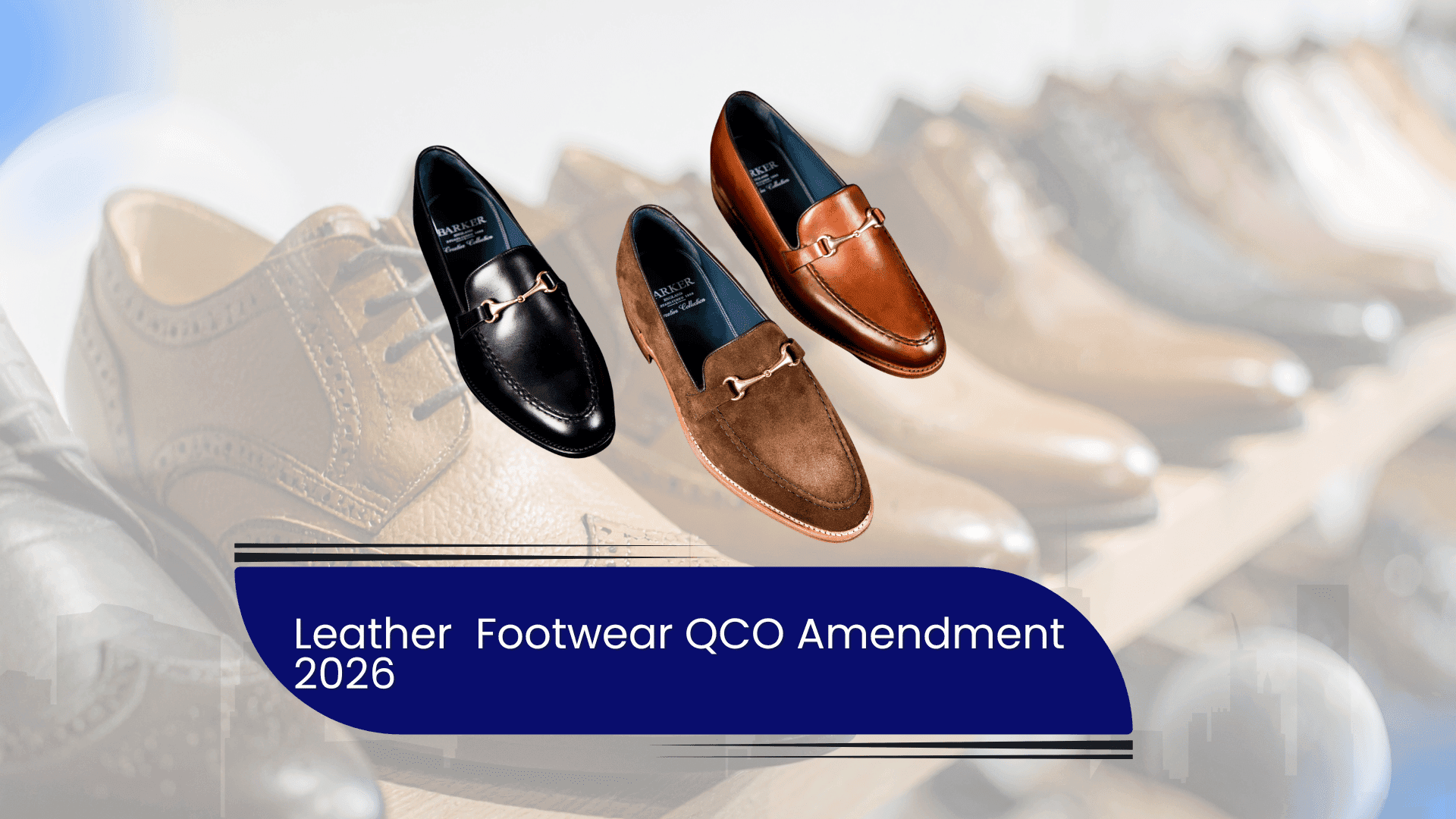
Government has extended compliance relief for the leather footwear sector under the Footwear QCO 2026
The Government of India has recently issued the Footwear made from Leather and other Materials (Quality Control) Amendment Order, 2026, which brings significant changes to the regulation of leather footwear and leather products. The amendment was issued by the Department for Promotion of Industry and Internal Trade (DPIIT) of the Ministry of Commerce and Industry and published in the Official Gazette, 12 June 2026, and was immediately effective.
The amendment changes the existing Footwear made from Leather and other Materials (Quality Control) Order, 2024, and enhances an important compliance exemption and adds a provision to footwear that will help footwear industry research and development (R&D) activities. The transfer will also help the manufacturers, importers, designers and product development teams to have more flexibility in operations, while ensuring that India continues to uphold its standards of product quality and consumer safety.
Major Changes Introduced Through the Amendment
The 2026 amendment brings two significant modifications to the existing Quality Control Order (QCO):
- Extension of the current exemption period from 31 July 2026 to 31 July 2027.
- Introduction of an exemption for imports used for research and development (R&D) and non-commercial purposes.
These changes have been introduced under the provisions of the Bureau of Indian Standards (BIS) Act, 2016, following consultation with the Bureau of Indian Standards (BIS).
Extension of Existing Exemption Until July 2027
One of the most notable features of the amendment is the extension of the existing exemption period by one additional year. The previous deadline of 31 July 2026 has now been replaced with 31 July 2027.
This extension provides stakeholders in the leather footwear industry with additional time to adapt to mandatory quality compliance requirements. Manufacturers and importers who are still in the process of aligning their products, testing procedures, and certification processes with BIS standards are likely to benefit from the extended timeline.
The government's decision reflects an understanding of industry concerns regarding implementation challenges, supply chain adjustments, and certification readiness. By granting an additional year, regulators aim to facilitate a smoother transition while ensuring that quality standards continue to improve across the sector.
New R&D Import Exemption for Footwear Manufacturers
The amendment also introduces a dedicated exemption for manufacturers importing products for research, testing, and development activities.
Under the new provision, manufacturers of leather and footwear products may import up to 4,500 pairs of goods or articles per year for research and development purposes without being subject to the provisions of the Quality Control Order.
This exemption is specifically intended for non-commercial activities and is expected to support innovation, design improvement, material testing, benchmarking, and product development initiatives.
The leather footwear industry is highly influenced by global fashion trends, advanced materials, and evolving consumer preferences. Manufacturers often require access to international samples and prototype products to evaluate new technologies and develop competitive products. The newly introduced exemption recognizes this industry requirement and provides a practical mechanism for facilitating innovation.
Conditions Governing the R&D Exemption
While the exemption offers flexibility, the government has imposed strict safeguards to prevent misuse.
No Commercial Sale Allowed
Products imported under the exemption cannot be sold commercially under any circumstances. Their use must be limited strictly to research, development, testing, evaluation, and related activities.
This restriction ensures that products entering India without mandatory quality certification are not made available to consumers.
Mandatory “NOT FOR SALE” Marking
All imported products covered under the exemption must be clearly marked and embossed with the words “NOT FOR SALE.”
The requirement creates a clear distinction between R&D imports and products intended for commercial distribution, helping regulatory authorities monitor compliance.
Disposal as Scrap
After completion of research and testing activities, the imported goods must be disposed of as scrap.
This provision prevents the products from re-entering the commercial market and ensures the integrity of India's quality control regime.
Record Maintenance and Government Reporting
Manufacturers utilizing the exemption are required to maintain year-wise records of all imported products covered under the scheme.
Such records must be produced before the Government whenever requested. This requirement strengthens transparency, accountability, and regulatory oversight.
Impact on the Leather Footwear Industry
The amendment is expected to be welcomed by stakeholders across the footwear value chain.
For manufacturers, the new exemption creates opportunities to access international product samples and advanced technologies without facing immediate compliance burdens. Product developers and R&D teams can study emerging trends, evaluate innovative materials, and conduct comparative testing to improve product quality and performance.
The extension of the compliance relief period until July 2027 also provides breathing space for businesses that are still preparing for full implementation of BIS quality requirements.
Industry experts believe the amendment strikes a balance between maintaining quality standards and supporting innovation-driven growth within the sector.
Strengthening India's Quality Ecosystem
The Government of India has increasingly relied on Quality Control Orders to improve manufacturing quality, protect consumers, and enhance the global competitiveness of Indian products.
The footwear sector remains a critical component of India's manufacturing and export economy. Through this amendment, the government has demonstrated its commitment to ensuring that regulatory requirements do not hinder innovation and technological advancement.
The policy also aligns with broader national initiatives such as Make in India, Atmanirbhar Bharat, and efforts to strengthen India's quality infrastructure through greater adoption of BIS standards.
Conclusion
The Footwear made from Leather and other Materials (Quality Control) Amendment Order, 2026 represents a significant regulatory development for India's footwear industry. By extending the exemption period until 31 July 2027 and introducing a carefully regulated R&D import exemption of up to 4,500 pairs annually, the government has provided valuable support for innovation, product development, and industry preparedness.
Manufacturers, importers, and other stakeholders should review the amended provisions carefully and ensure compliance with the conditions attached to the new exemption. The amendment is expected to encourage innovation while preserving the quality standards that are essential for consumer protection and long-term industry growth.